NICE guideline NG59
Red flag symptoms of Cauda Equina Syndrome
If you, or someone you know, develops any of the symptoms below — even one of them — go straight to A&E. Do not wait for a GP appointment. Tell the triage nurse you are concerned about Cauda Equina Syndrome.
CES is a surgical emergency. Decompression is most effective within 48 hours of symptoms starting.
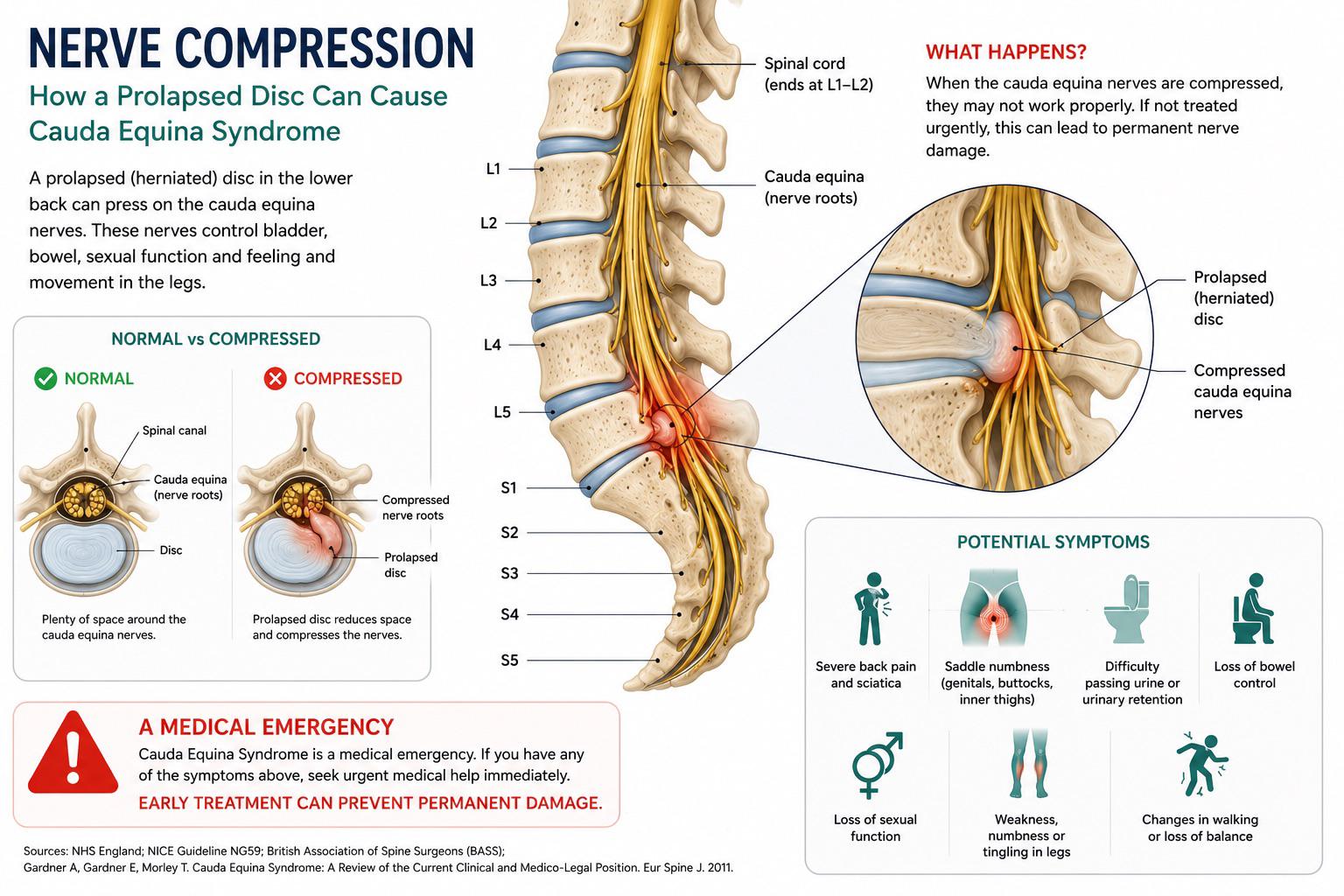
Saddle anaesthesia or paraesthesia
Numbness, tingling or altered sensation in the inner thighs, buttocks, perineum or genitals — the area that would touch a saddle.
Bladder dysfunction
Difficulty starting urination, inability to pass urine, loss of the urge to go, or new urinary incontinence.
Bowel dysfunction
New faecal incontinence, loss of sensation when passing stool, or loss of anal tone.
Sexual dysfunction
Sudden loss of genital sensation, erectile dysfunction or inability to ejaculate — a critical and often-missed warning sign.
Bilateral sciatica or leg weakness
Severe pain, weakness or altered sensation in both legs — or progressing in one leg.
Severe progressive low back pain
Especially when combined with any of the symptoms above.
Source: National Institute for Health and Care Excellence (NICE) guideline NG59 — “Low back pain and sciatica in over 16s”. This page is for awareness and does not replace clinical advice.
What to say in A&E
Use these words at triage. They reference NICE guideline NG59, which sets out how CES should be assessed urgently.
I am worried I may have Cauda Equina Syndrome. I have new red flag symptoms — please assess me urgently in line with NICE guideline NG59. My symptoms include: [describe yours, e.g. numbness in the saddle area, loss of bladder or bowel control, bilateral leg pain or weakness, or sexual dysfunction]. I understand I need an urgent MRI of the lumbar spine.