The patient pathway
What to expect, step by step.
CES moves quickly, and the hospital experience can feel disorienting — especially if no one explains what’s happening or why. Here’s the rough shape of it, written in plain English.
If symptoms are happening now, go straight to A&E.
Don’t wait for a GP appointment. Tell them you’re worried about cauda equina syndrome.
Symptoms start
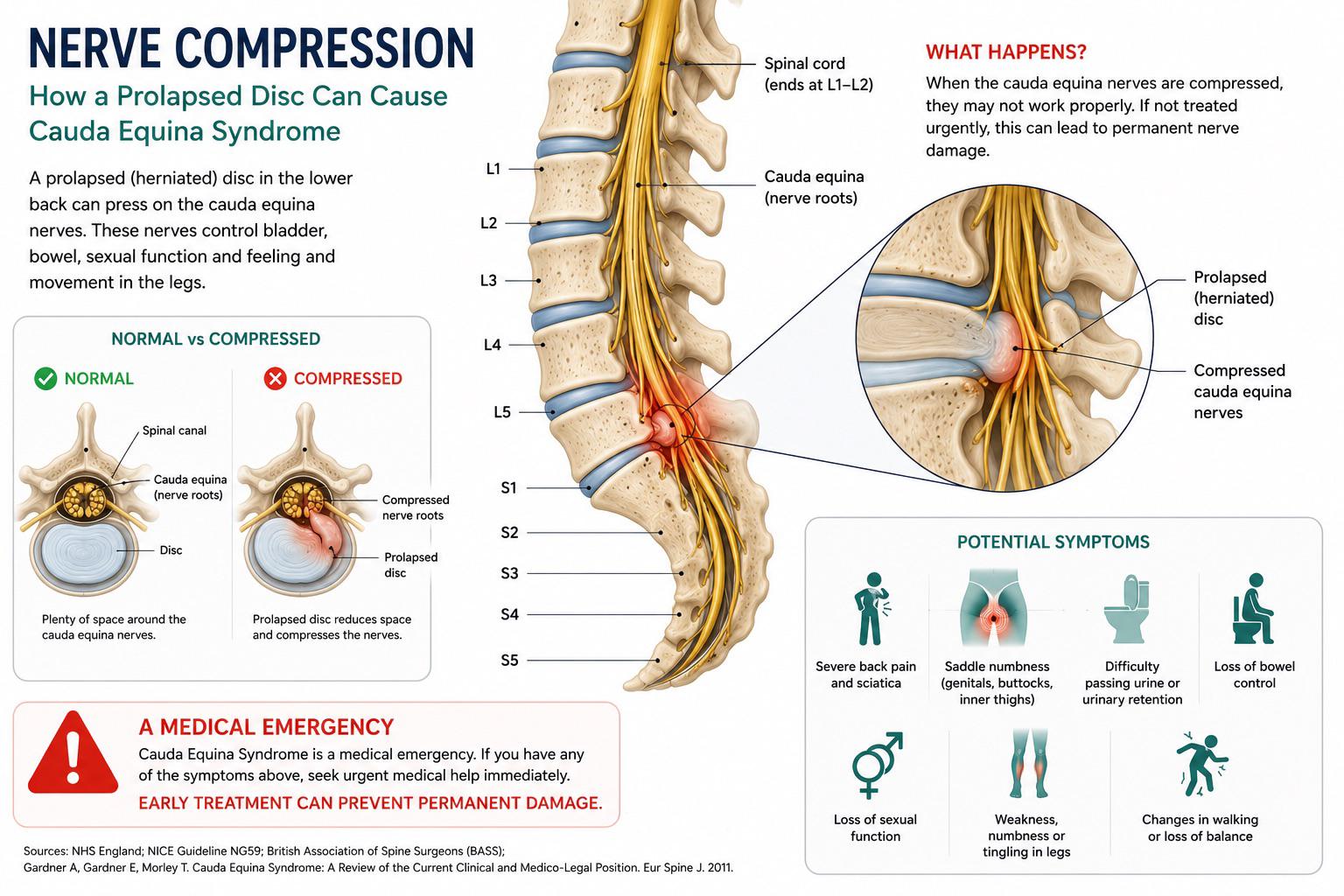
It often begins with severe lower back pain, numbness around the saddle area, sudden leg weakness, or new bladder or bowel changes. Trust your body — these signs are not normal back pain.
Get to A&E
Go straight to A&E — don't wait for a GP appointment. Say the words: "I'm worried about cauda equina syndrome." If you can't get there safely, call 999.
Triage and examination
A doctor will ask about your symptoms and do a quick neurological exam — checking leg strength, reflexes and sensation. A short rectal examination helps assess the saddle-area nerves. None of this should be embarrassing — be open about everything you've noticed.
Emergency MRI scan
An MRI of the lower spine confirms whether the cauda equina nerves are compressed and what's causing it. This scan is the only way to be sure, and should not be delayed if CES is suspected.
Decompression surgery
If CES is confirmed, you'll be referred urgently to a spinal surgeon. Surgeons aim to operate within roughly 48 hours of symptoms starting — the earlier, the better the chance of full recovery.
Hospital recovery
The first days after surgery focus on rest and careful monitoring. You may have a catheter for a while. Physiotherapists will start gentle movement as soon as it's safe. Most people stay in hospital for several days, sometimes longer.
Rehabilitation
Recovery is rarely linear. You'll likely work with physiotherapy, and possibly with continence nurses or a pain team. Progress is measured in weeks and months, not days. Set small goals and be patient with yourself.
Long-term support
Some people recover fully; others live with lasting changes. Either way, you don't have to do it alone. Our community is built by people who've walked this same road — you're welcome here whenever you need us.
Trust your symptoms
Trust your symptoms. Trust yourself.
One of the biggest challenges facing people with suspected CES is self-doubt. Many people delay seeking medical attention because they think they’re overreacting, worry about wasting NHS time, or hope their symptoms will improve on their own. When it comes to Cauda Equina Syndrome, delaying treatment can have life-changing consequences.
It’s better to attend A&E and be told it isn’t CES than to stay at home with symptoms that need urgent treatment.
What to tell the healthcare team
Be clear and specific. You may find it helpful to open with:
“I’m concerned that I may have Cauda Equina Syndrome because I’m experiencing the following symptoms…”
Then explain:
- Any bladder changes
- Any bowel changes
- Any saddle numbness
- Any sexual dysfunction
- Any leg weakness or numbness
- When the symptoms started
- Whether symptoms are worsening
Don’t be embarrassed to discuss bladder, bowel or sexual symptoms. These are important clinical indicators that healthcare professionals need to know about.
Questions you can ask in A&E
- Could my symptoms be caused by Cauda Equina Syndrome?
- Do I need an urgent MRI scan?
- What neurological examination findings have been identified?
- What should I do if my symptoms worsen?
- Who should I contact if I have concerns after discharge?
- What symptoms would require me to return immediately?
You have the right to understand your care and ask questions about your treatment.
Advocacy tips
Bring someone with you
If possible, attend with a friend, family member or advocate who can help explain your symptoms and support you during appointments.
Keep a symptom timeline
Write down when symptoms began, how they’ve changed, any bladder or bowel problems, and any numbness or weakness. Clinicians can assess you more accurately with a clear timeline.
Trust your body
You know your body best. If something feels wrong, seek medical advice — don’t talk yourself out of it.
Be honest
Even symptoms that feel embarrassing or difficult to discuss may be crucial in helping clinicians recognise CES.
You deserve to be taken seriously.
Many people living with CES describe feeling dismissed, doubted or misunderstood before receiving a diagnosis. We want you to know: your symptoms matter. Your concerns are valid. You’re not wasting anyone’s time. You deserve to be listened to and to receive appropriate assessment and care. If you believe something is wrong, seek medical attention and advocate for yourself.
If in doubt, get checked out.
Every CES journey is different. This is a guide, not a promise — ask your team to talk you through your own situation.